
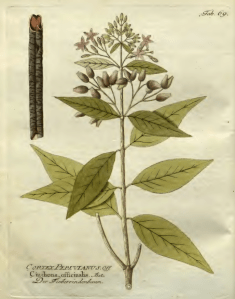
The research environment examines the process by which life-saving and health-promoting medicines and equipment became for-profit commodities between 1500 and 1900. The project aims to show how medicine, law, and colonialism were intertwined in the creation of patents, trademarks, and intellectual property rights, as well as traditions of medical authorship. Through a global historical analysis of this interconnected process, the research environment offers a nuanced examination of the tension between the need for protection of intellectual work and the democratization of science, which leads research on the history of medical and pharmaceutical intellectual property in a new direction. Our team contributes to new insights and methodological development in the fields of history of knowledge, medical humanities, legal history, privacy studies, and colonial history, while providing an essential historical background to the contemporary public discussion on intellectual property rights and access to medicines across the globe.
Framework
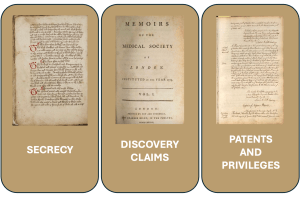
In our research environment, we instrumentally divide forms of knowledge ownership over medicines into three main strategies used by different historical agents and in multiple contexts: the secrecy strategy, the discovery claim strategy,and the intellectual rights strategy. These three strategies still exist today and are part of the medical and pharmaceutical landscapes – there are overlaps between them, and notions from one strategy can be transmitted and adapted to others. Distinguishing these strategies is instrumental in encompassing the multifaced nature of the commodification of medicines. Therefore, we will investigate each strategy in the context in which they became the predominant manner to profit – monetarily or in status – from remedies and treatments.
Scope
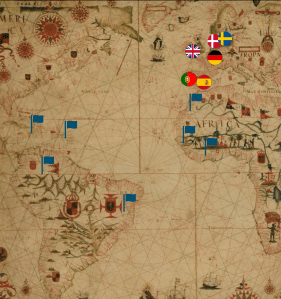
Our project focuses on the period between 1500 and 1900, mostly directed towards the Atlantic Colonial Nexus. The trans-imperial perspective will be particularly grounded on four different contexts, which were chosen to highlight different relations between colonialism and claims of medical and pharmaceutical discoveries: 1. Great Britain and their Atlantic colonies; 2. the Iberian Peninsula and their Atlantic colonies; 3. Scandinavia and their Caribbean colonies; 4. German territories and their parallel access
to colonial knowledge on medicines.



 Secrets to Patents